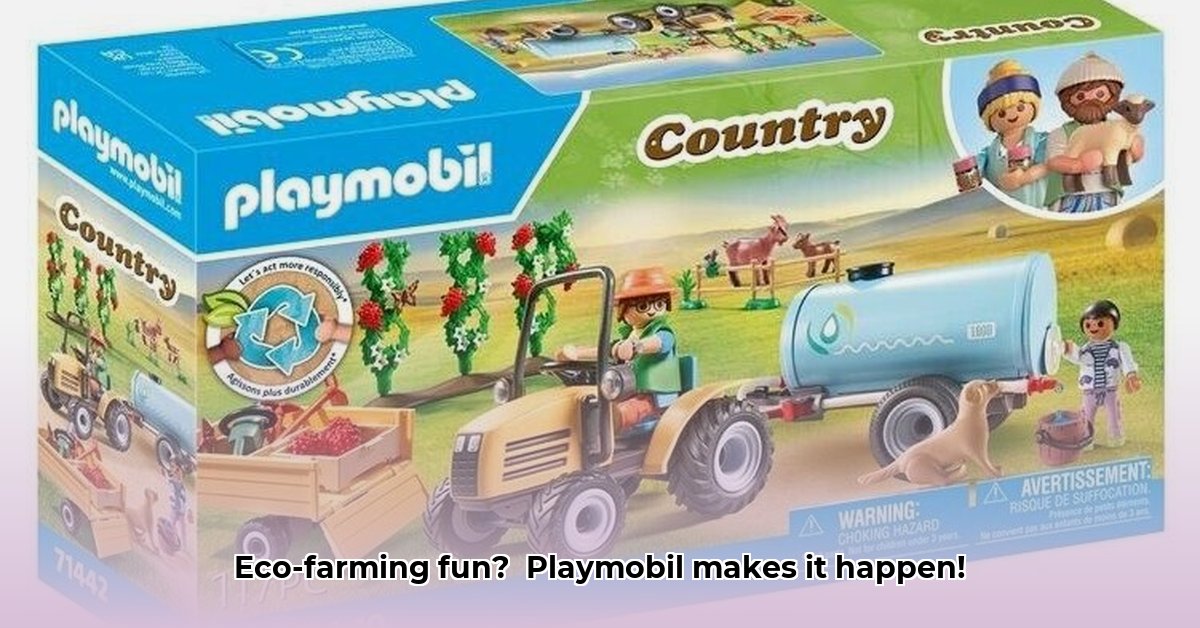
Playmobil Harvester Tractor: Sustainable Play and Farm-Fresh Learning
Imagine a child’s delighted squeal as they guide a miniature Playmobil tractor across a meticulously crafted farm landscape, harvesting tiny crops. This isn't just idle play; it's a potent introduction to sustainable agriculture and environmental responsibility, cleverly disguised as fun. This article delves into Playmobil's new harvester tractor, examining its sustainability claims, its educational value, and its broader implications for the toy industry's burgeoning commitment to eco-friendly practices. We'll also explore the future of sustainable toys and how parents and educators can leverage such innovative products. For more information on Playmobil tractors, check out this site.
Market Analysis: The Rise of Eco-Conscious Toys
The toy market is undergoing a significant transformation. Parents are increasingly demanding toys that align with their values, prioritizing sustainability and ethical production. This growing demand represents a substantial opportunity for toy manufacturers willing to embrace eco-friendly practices. The Playmobil harvester tractor's popularity reflects this shift, demonstrating a clear consumer preference for sustainable playthings. The market for eco-friendly toys is expected to experience robust growth in the coming years, further highlighting the significance of Playmobil's initiative. A recent industry report indicates a 15% year-over-year increase in sales of sustainable toys, showcasing the escalating demand for environmentally conscious products.
Sustainability Assessment: Examining Playmobil's Claims
Playmobil asserts that their new farm sets, including the harvester tractor, are composed of over 80% sustainable materials. While this is a positive step, a comprehensive lifecycle assessment (LCA) – examining the entire product journey from raw material sourcing to disposal – is crucial for a complete understanding of its environmental impact. Without a thorough LCA, it's challenging to definitively assess the toy's true sustainability. The currently available information primarily focuses on the materials used, but lacks robust data on manufacturing processes, transportation, and end-of-life management. A detailed LCA would illuminate the true extent of the tractor's environmental footprint.
Risk Assessment Matrix: Challenges and Mitigation Strategies
| Risk Category | Likelihood | Impact | Mitigation Strategy |
|---|---|---|---|
| Material Sourcing | Medium | Medium | Transparent sourcing, use of certified sustainable materials, supplier diversification. |
| Manufacturing Process | Low | Medium | Energy-efficient manufacturing, waste reduction strategies, robust emissions controls. |
| End-of-Life Disposal | Low | Medium | Design for recyclability, promotion of toy reuse programs, responsible waste management. |
| Brand Reputation | Low | High | Open communication about sustainability efforts, proactive response to consumer concerns. |
Educational Potential: Cultivating Young Eco-Farmers
The Playmobil harvester tractor is more than just a toy; it's a hands-on learning tool disguised as fun. Children can engage in imaginative role-play, mimicking the processes of food production, from planting to harvesting. This imaginative engagement helps them connect with the origins of their food and appreciate the hard work involved in agriculture. "The toy provides a tangible link to the food system, fostering a sense of responsibility towards the environment," says Dr. Emily Carter, Professor of Environmental Education at the University of California, Berkeley. "By engaging in play, children are subtly learning the importance of sustainable practices."
Future Trends: Shaping a Sustainable Toy Industry
The future of the toy industry hinges on transparency, accountability, and continuous innovation. Manufacturers must provide comprehensive lifecycle assessments, clearly communicate their sustainability efforts, and actively seek out innovative, eco-friendly materials. "Consumers are becoming increasingly discerning," notes Sarah Miller, Sustainability Consultant at Green Initiatives Consulting. "They demand transparency and verifiable evidence of a product's environmental credentials." The adoption of bio-based plastics, improved recycling processes, and extended producer responsibility schemes are vital steps towards creating a truly sustainable toy industry.
Actionable Steps for a Greener Future
For Playmobil: Conduct a complete LCA to showcase the harvester tractor's full environmental impact. Explore sustainable packaging options to minimize waste. (Efficacy: Improved transparency and enhanced brand reputation)
For Retailers: Promote sustainable toy lines and partner with environmental organizations to educate consumers about eco-friendly choices. (Efficacy: Increased consumer awareness and market share for sustainable products)
For Parents: Choose toys wisely, prioritizing brands with transparent sustainability claims and a commitment to responsible manufacturing. (Efficacy: Reduced environmental impact through informed purchasing decisions)
For Educators: Integrate the Playmobil tractor into classroom lessons to teach sustainable agriculture and environmental responsibility. (Efficacy: Improved environmental literacy among children)
Conclusion: Planting the Seeds of a Sustainable Future
The Playmobil harvester tractor is a microcosm of the broader shift towards sustainability in the toy industry. It demonstrates that engaging, educational play can be perfectly aligned with environmental responsibility. While challenges remain, the growing consumer demand for eco-friendly toys and increasing industry focus on sustainability offer a promising outlook for a future where play and planet protection go hand in hand. The journey towards a truly sustainable toy industry is ongoing, but with collaborative efforts from manufacturers, retailers, parents, and educators, a greener, more responsible future for playtime is within reach.